Australia’s phase-out of fluorescent lighting is underway, aligned with the Minamata Convention on Mercury and supported by guidance from Lighting Council Australia. With import and manufacturing restrictions progressing between 2025 and 2027, fluorescent lamps will become increasingly difficult to source as supply chains wind down and product availability reduces, opening a clear opportunity to transition to more efficient LED solutions and investigate retrofit pathways that improve both performance and sustainability.
Retrofit as a practical response
In this context, retrofit solutions provide a practical pathway to transition existing lighting systems. Rather than replacing complete luminaires, LED technology can be integrated into existing fluorescent fittings, retaining usable infrastructure while improving performance, efficiency and light quality. This is particularly relevant where constraints such as low ceiling heights, limited-service space, or fixed ceiling grids make full replacement difficult without broader building disruption.
This approach is also well suited to heritage and architecturally sensitive environments, where maintaining the existing ceiling structure and visual continuity is a key consideration. Retrofit enables lighting upgrades to be delivered within the existing building fabric, avoiding unnecessary intervention while improving output, glare control and overall visual comfort. When combined with lower energy use and reduced maintenance, retrofit solutions offer a balanced way to improve performance and manage cost, especially where building constraints make full luminaire replacement difficult.
A study | City of Joondalup Administration Offices
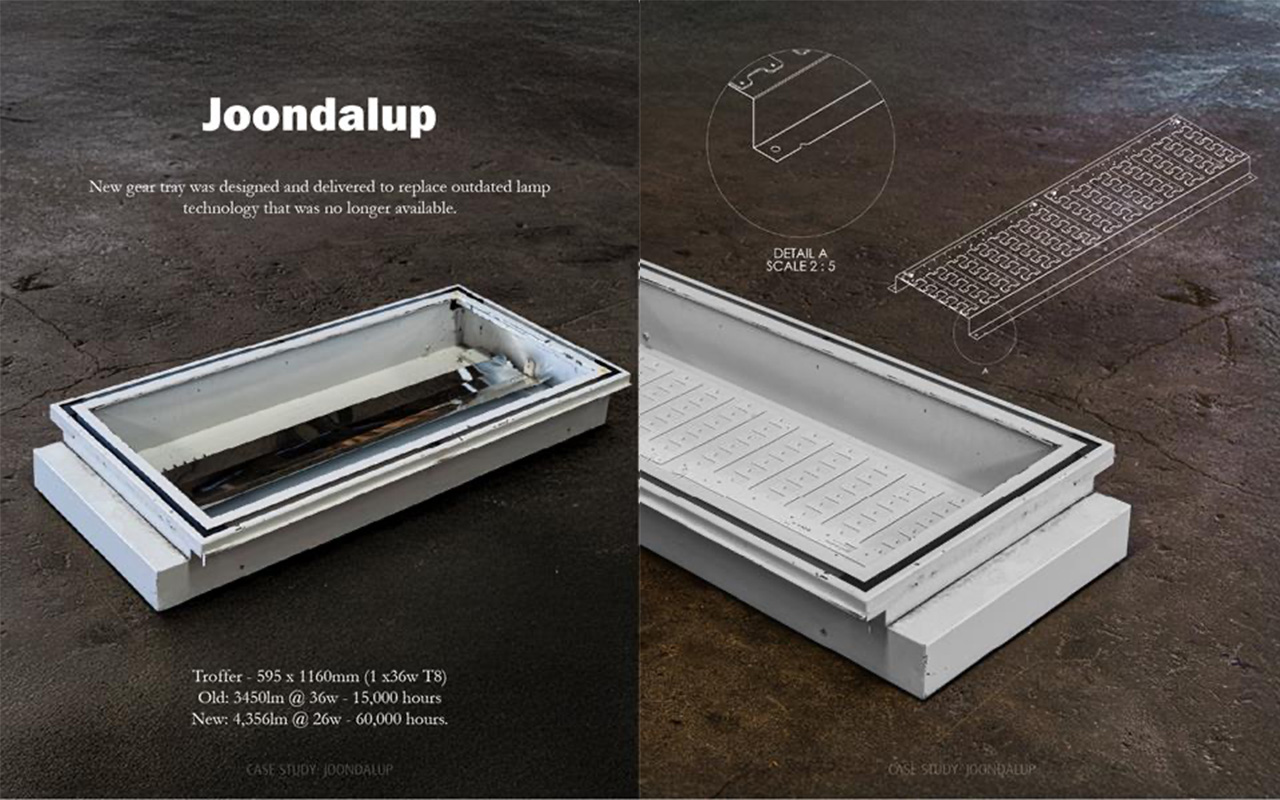
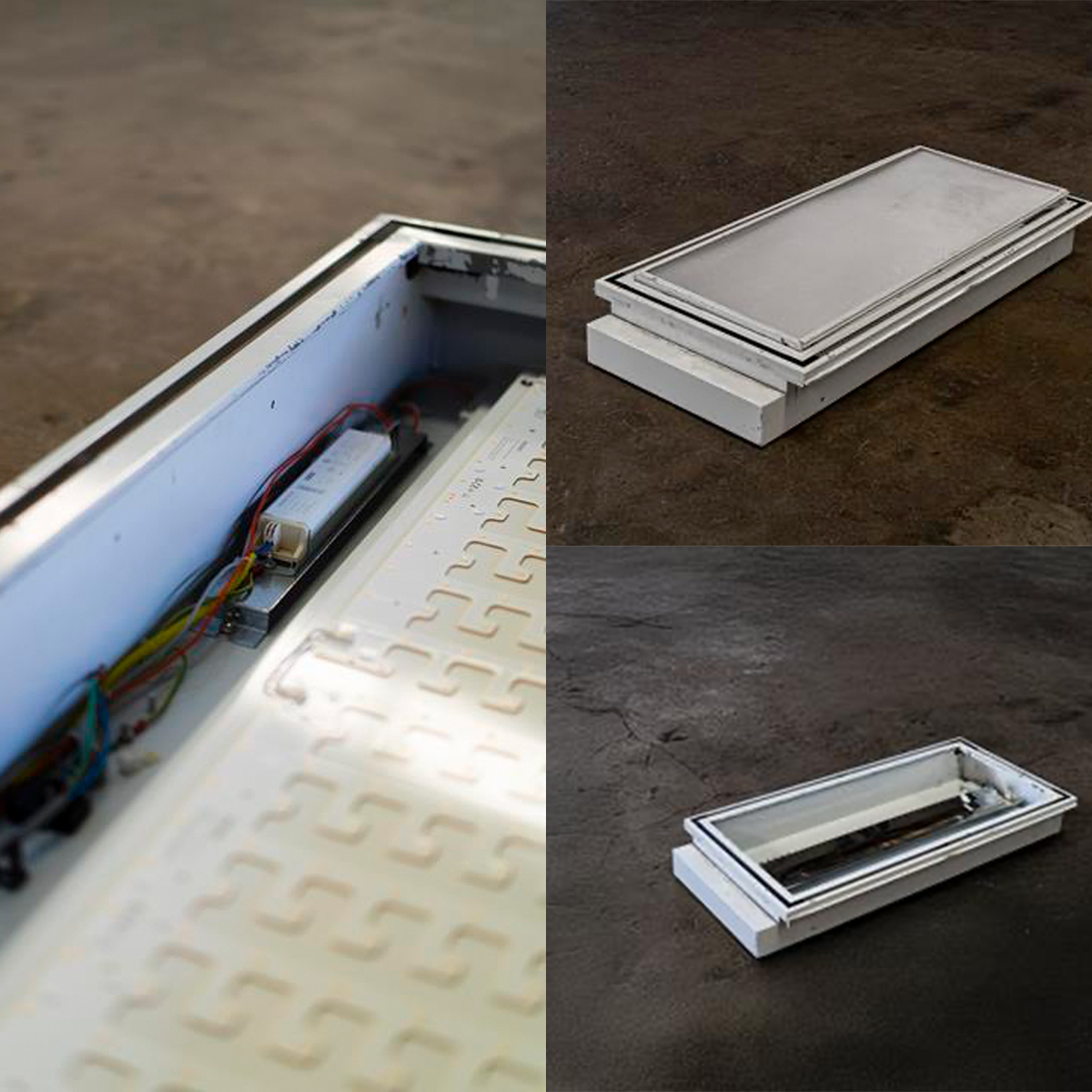
At the City of Joondalup administration offices, existing custom panel luminaires using T8 fluorescent lamps and legacy iron-core transformer technology presented challenges due to their unique sizing and ceiling grid layout. Replacement options were limited by geometry and availability of suitable modern equivalents.
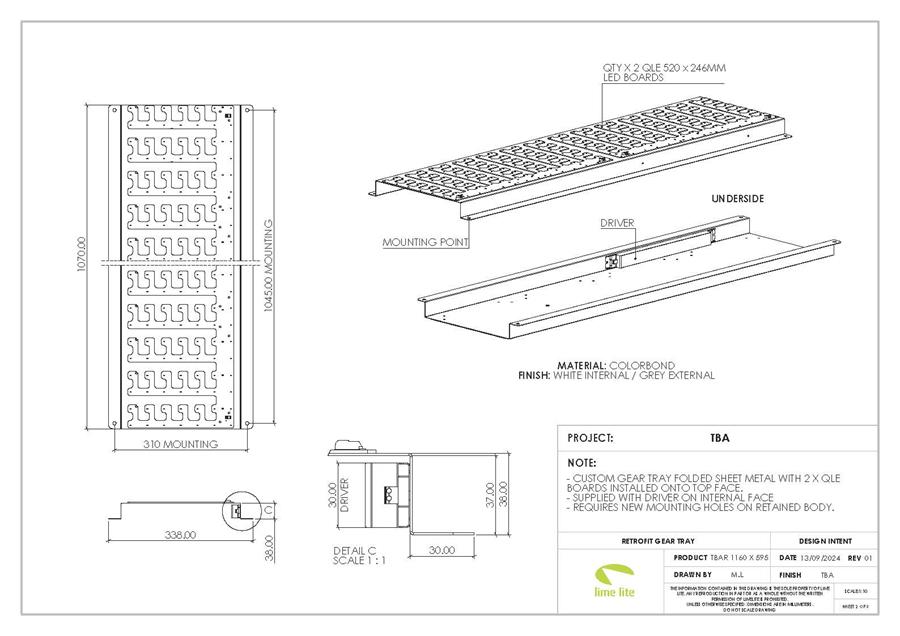
In collaboration with Australian manufacturer, Limelite in Melbourne, the existing fittings were reviewed and two solutions were developed. The first was a direct replacement luminaire designed to match the existing layout using modern LED technology. The second was a retrofit solution, retaining the original luminaire body and replacing the internal components with LED modules, updated control gear, and a new diffuser system to improve light quality and reduce glare. Both solutions delivered approximately 60% reductions in energy consumption. When applied at scale across the building, this translates into significant reductions in operating costs, along with improved lighting performance and reduced ongoing maintenance demand. The design of both ensured that there were no costly changes to the ceiling grid or the air conditioning vents around the fittings, marking a significant cost saving.
A more efficient lighting future
As fluorescent lighting is phased out, the transition to LED presents a clear opportunity to reduce energy use, improve lighting quality, and lower ongoing operating costs. Retrofit and replacement solutions each play a role depending on application, but both support a more efficient and sustainable lighting outcome.
Sii Light can assist in identifying practical lighting upgrades, from retrofit solutions through to full LED replacement. If you are managing fluorescent lighting and looking to reduce energy use, improve light quality, or better manage supply risk, please contact our team to discuss suitable options